
We deliberately crossed the Mediterranean at some speed so we could spend the busy summer months in waters we know well, surrounded by other liveaboard families with children. The Ionian is affordable, familiar, wonderfully varied, full of short hops between anchorages, and scattered with stunning spots. The people are warm, and the experience always exceeds expectations.
No surprise, then, that it’s also one of the most popular sailing areas. In high season, around 1,300 charter yachts sail here, in flotillas, with a skipper, or bareboat. People step aboard for one or two weeks, often on a completely unfamiliar vessel. Having done this ourselves many times in the past, I’ve always had great sympathy for them. They might well be good sailors – and if you’re not experienced, I can’t quite understand why you’d choose it – but even for the capable ones, stepping onto an unknown boat, often in only passable condition, with signs of weeks of previous use, and in unfamiliar waters, is not always easy.
We’ve had our own boat for two years and are still learning every day. The conditions here are different, too, mooring with lines ashore or, worse, anchoring and running stern lines to the rocks, requires technique. When it’s busy, it can lead to some… impressive scenes. Some sailors handle it skilfully and creatively; others panic, creating painful moments for everyone watching. I’ve always been understanding, defending them even when fellow liveaboards rolled their eyes.
Until last week.
The first incident happened in Kastos. We’d arrived early and found a perfect spot at anchor near the entrance of the bay, carefully calculating our swing radius and distance to the rocks. Over dinner, we watched the chaos in the tiny harbour, something we usually enjoy, with the smug certainty of “armchair captains” who know best.
Afterwards, returning to our boat, we noticed from a distance that others seemed rather close. On arrival, we were astonished: right in front of us, five motorboats had tied side by side with shore lines to the very rocks we had so carefully avoided, seemingly oblivious to our position. While we swung peacefully on the breeze, they drifted closer, and that’s before considering what this did to our anchors.
To avoid confrontation, we chose the safe option: leaving before things got worse. We politely signalled our intention to depart, only to be met with outrageously rude responses, as though we were the problem. Thankfully, we escaped without incident, but the realisation that people can be so careless with both their own and others’ safety was sobering.
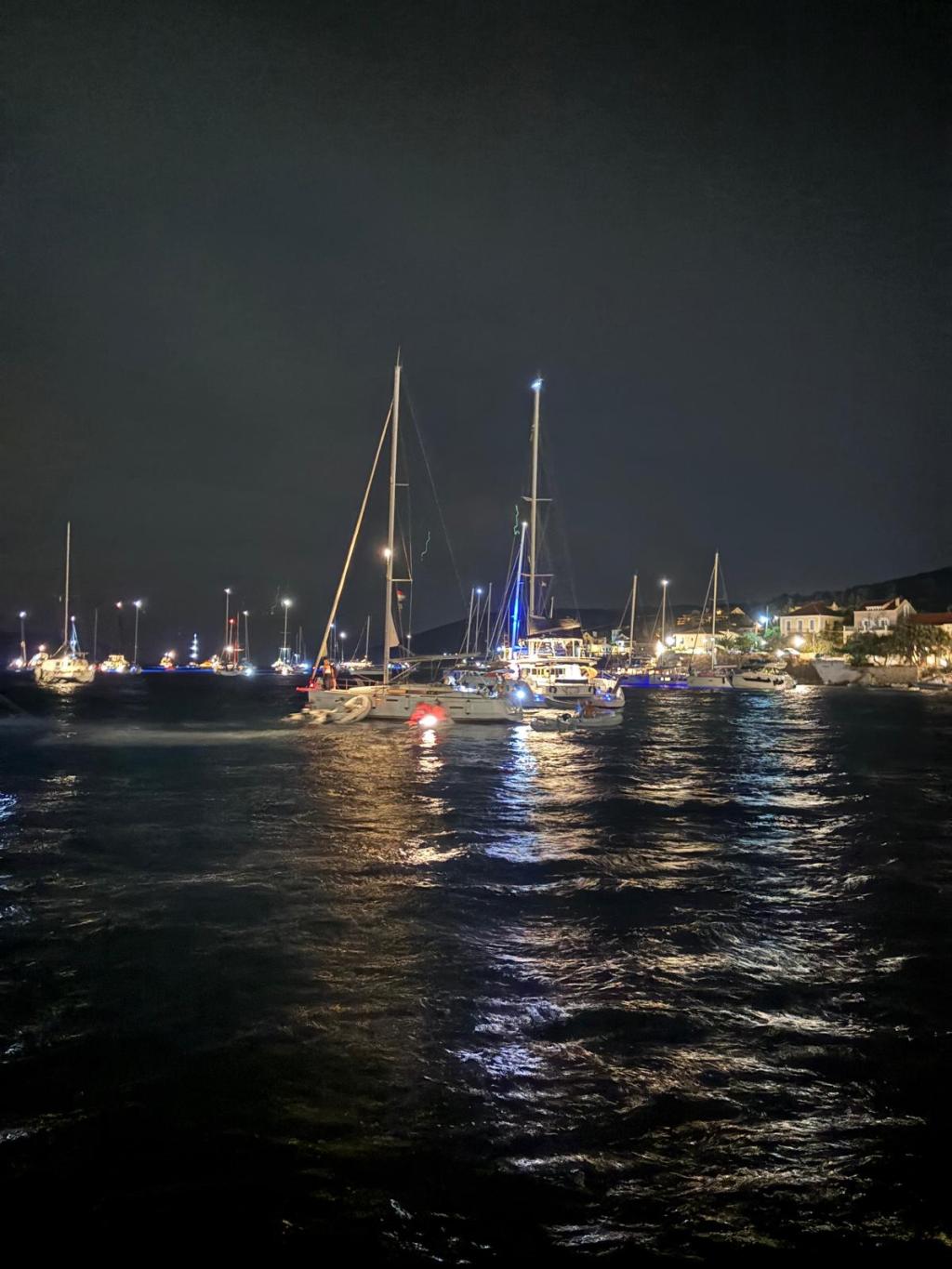
The second incident came a few days later in Fiskardo, the busiest spot in the Ionian, where there’s always some drama. That night was no exception. Even with shore lines to the rocks, boats lie tightly side by side. Outside the bay, it’s too deep to anchor, and once the day-trip boats leave, the superyachts arrive. Anchors are inevitably laid over each other, creating what we call “anchor soup”. With patience and good seamanship, this usually resolves itself.
But that evening a light breeze picked up – barely 15 knots – enough for everyone to lie taut on their anchors and, in some cases, start dragging. Over coffee after a lovely dinner ashore, we saw boats in trouble. One Dutch charter crew shouted, “Our anchor’s not holding!” Within minutes, they were lying beam-on across three other boats – a hopeless tangle.
On our boat, there’s never hesitation about helping. Edwin and Ton leapt into Hendrickje, our dinghy, while I watched the scene unfold. It’s always reassuring to see sailors rally, within minutes, five dinghies were assisting, and the monumental task of disentangling anchors began. The police eventually stepped in. By then, eight other boats had left, and two had hit the rocks. Situations like this can trigger a domino effect, another reason why help is so vital.
The next day, we checked in with the charter crew. Cheerful and upbeat, they told their side of the story: naturally, it was someone else’s fault. Luckily, they’d paid extra to waive the insurance excess. Asking about damage to other boats didn’t seem to cross their minds. The holiday must go on.
Of course, these things are bound to happen in busy anchorages. Damage is inevitable. But this mentality made me think. What if it happened to our boat? What if we weren’t even on board? A charter boat, it seems, is often handled with less care than an owner’s boat, especially when that boat is also your home.
During these incidents, I realised just how fiercely protective I am – like a lioness – of both my family and our boat. Safety comes first. And when, upon leaving, you discover your neighbours don’t even know which line to release first when casting off, you think twice about seeking out the crowds again.
We’ll be keeping to quieter waters for a while, there’s plenty of space out here. And no, I don’t want to tar all charter boats with the same brush. But I’m aware now that with so many boats, and so many different sailors, the risks multiply. So we’ll just stay a little out of the fray, keep our well-meant advice to ourselves, and look forward to the quieter end of the season… when we get a little bit of the water back to ourselves.
Because sometimes, giving yourself a little space is the best way to protect the freedom you came here for in the first place.
Written by: Mirjam

 Sailing Simon Hendrick
Leave a comment